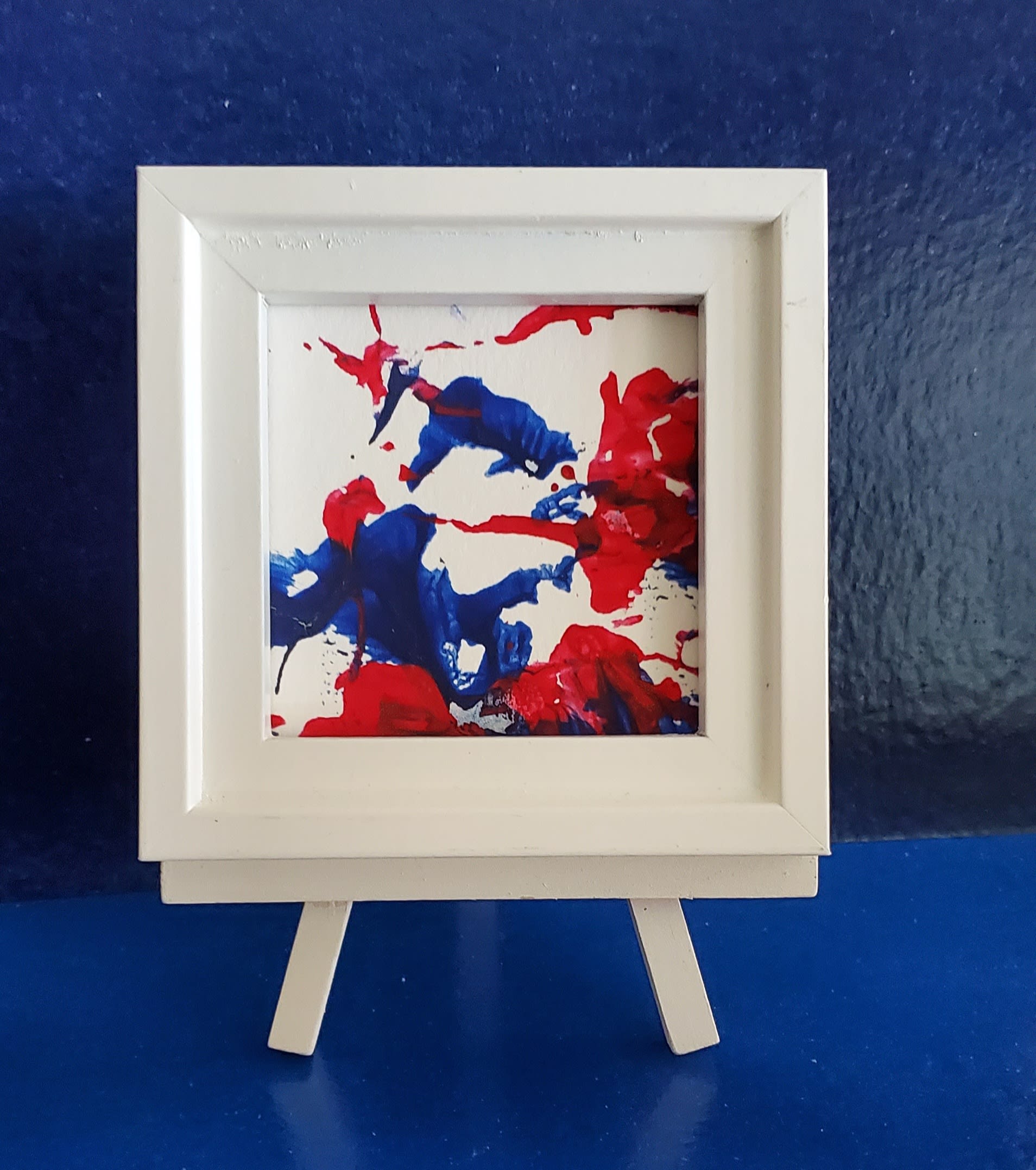
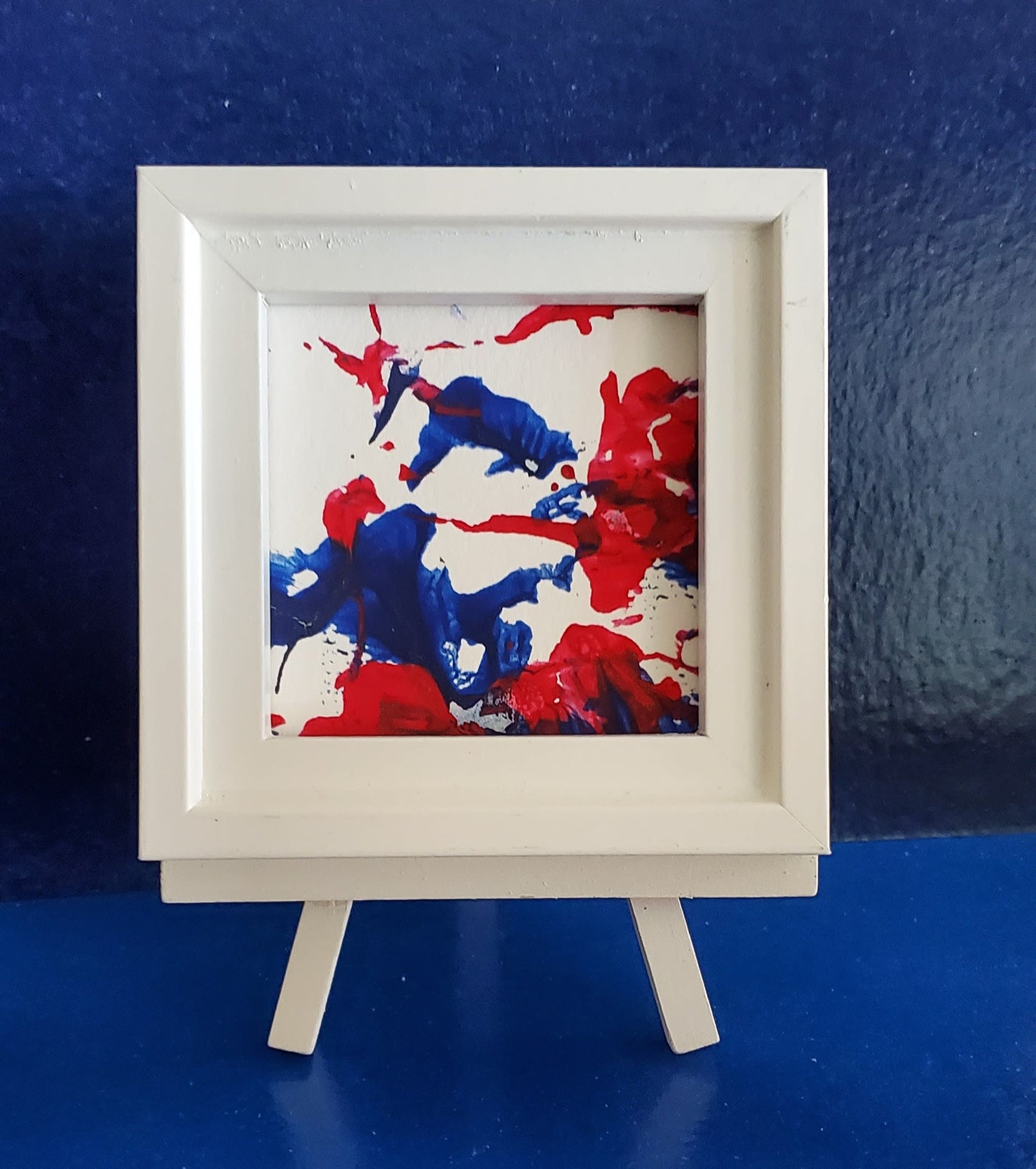
Freedom is a small tempera painting, just 2 1/2 by 2 1/2 inches, that explores color and movement in an unstructured form. Bold red and blue pigments flow and overlap across a white background, creating a fluid dialogue between the two tones. The painting’s abstract composition captures a sense of energy without defining shapes, letting the interaction of colors speak for itself. Framed simply in white and displayed on a small easel, the piece highlights how vibrant hues and clean framing can amplify intensity, even at a very intimate scale. This was an opportunity for me to try something new, to let the process lead and allow the work to breathe with spontaneity.
The eye meets the impact of saturated red and blue first, set against a white ground that functions as both field and silence. Wilson builds the surface through fluid tempera handling: pigment pools, feathers, and overlaps, producing soft edges, runs, and dense opaque passages that keep the composition in motion. The work is all pulse and interval, with no defining contour to contain the forms; that open structure aligns it with postwar abstraction, especially the lyric spontaneity of color field painting and action-inflected abstraction in a miniature register. The simple white frame and easel presentation sharpen the painting’s intimacy and give the colors a crisp, modern clarity.
Tags:
abstract expressionism,tempera,red and blue,miniature painting,fluid gesture,white ground,color field,contemporary abstraction,intimate scale
About Fred Wilson 3
Fred Wilson 3, based in Prescott Valley, AZ, creates original artwork available to collect on Art Emerge, an AI-powered marketplace for artists and collectors.
Key Facts
Location: Prescott Valley, AZ
Fred Wilson, a visionary artist, was propelled into the world of creativity after relocating to Arizona in the 1970s. Originally a successful marketing and design management professional, he nurtured his artistry as a passionate hobby, a self-enrichment journey rather than a conventional occupation. A transformative period of mentorship with fellow artists ignited a fervor for painting within him, prompting him to trade his corporate life for the artist's palette. For several years, Fred championed the art scene in Prescott by owning and operating his own gallery. Eventually, he retired from his managerial role to immerse himself fully in the exquisite realm of painting. His distinct artistic approach manifests in his preference for miniature and ACEO formats, a testament to his love for the demanding task of infusing depth and detail into a compact canvas.